Published by The Living Church
The death of the Living in Love and Faith project has not settled well with liberals in the Church of England. Last month, the House of Bishops announced the effective end of the gay-blessings saga that has divided England’s national church for almost three long years.
After belatedly taking more theological and legal advice, the bishops concluded that the only way to make further progress on Prayers of Love and Faith—a suite of liturgies and blessings for same-sex couples—would require supermajorities in the church’s governing body that simply do not exist.
And so, although a consistent majority of liberals in this General Synod not only endorsed gay blessings but longed to introduce same-sex church marriage, the PLF train has run into the buffers.
Most likely, there will not be an option for progressive parishes to hold standalone blessings outside of regular Sunday worship, once the big prize sought by the liberal wing. Neither will the ban on gay clergy entering civil marriages be lifted, something the bishops once intimated they would also do.
There have been some conservative mutterings about another consequence of the fizzling out of Living in Love and Faith: a plan to allow conservative churches to opt out of the oversight of their liberal bishops and instead come under the care of a like-minded bishop elsewhere has also been killed off.
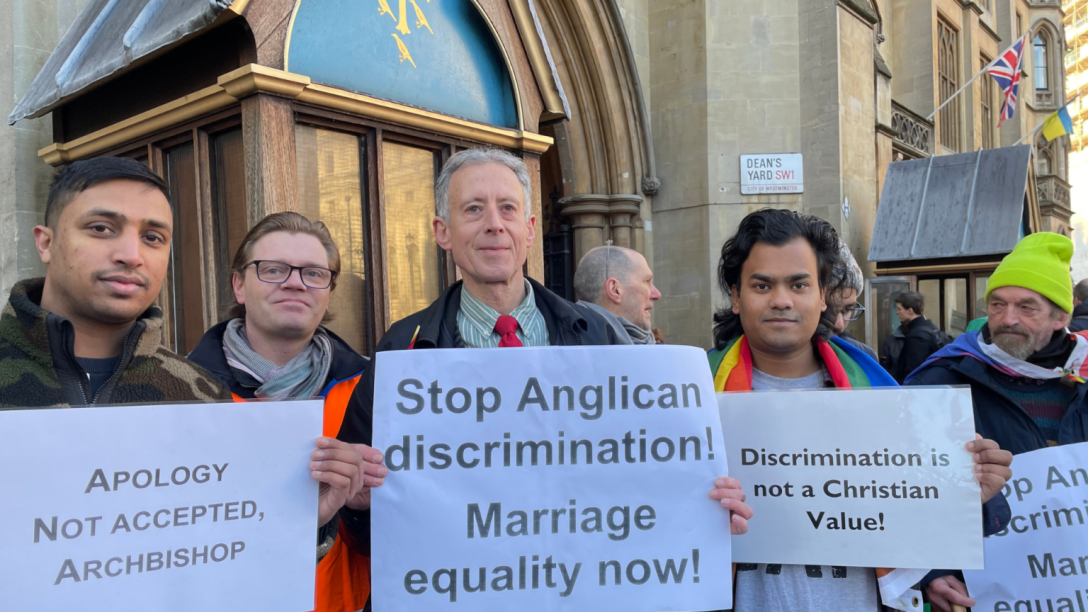
But the major ructions have come from the liberal faction. Much energized by the last three years of battling to move gay blessings over the line, progressives in the C of E have been left bereft and, increasingly, angry.
‘A Pastoral Failure’
Together for the Church of England, the main liberal pressure group, issued a statement lamenting what it described as the “pastoral failure by those to whom we look as our chief shepherds.” The update from the bishops has caused “overwhelming” grief and pain for LGBT people, the group said, and appeared to have been prompted by a “relentless campaign … focusing on details of procedure and law” led by conservatives.
“It may be that to offer a true welcome to same-sex couples, law or canon needs to change,” Together said. “But that is what synod does, all the time, and we stand ready to work for change and inclusion by whatever means necessary.”
Others offered more personal grief at the death of their hopes for a more LGBT-affirming church. The Dean of Canterbury Cathedral, David Monteith—who is in a same-sex civil union—wrote an impassioned blog post that spoke of his deep hurt. “I found my life and heart constrict as I received this news once again; being told loudly and clearly that our minority lives and loves must remain marginal, hidden and uncatered-for like a vegetarian in 1980s France.”
The sweeping apology endorsed by the synod toward LGBT people back in 2023 at the launch of the Prayers now rang hollow, Monteith added. “Micro-aggressions and visceral fear and anger continue to be experienced by us. The new Christian inclusion is but fantasy.”
Similar remarks came from Dean Mark Oakley of Southwark Cathedral, who is also gay. Reading the bishops’ statement made it hard for him “not to conclude that the Church of England is still homophobic and does not believe in the equality of love,” Oakley said in a sermon shortly after the announcement.
Some bishops known to be supportive of Prayers of Love and Faith have tried to assuage the anger and sadness from their liberal allies. Bishop David Walker of Manchester wrote a lengthy letter to his diocese explaining that introducing standalone services of blessing or letting gay clergy marry would have come at too high a price.
In order to move the necessary laws through the synod would have required buying off conservatives with a de facto church within a church. And it was this the bishops, even the liberals, could not stomach as “guardians of the unity of the church,” Walker wrote.
Similarly, Bishop Joanne Grenfell of St. Edmundsbury and Ipswich said in an interview with The Church Times that the price of proceeding on PLF had become too high.
Defying the Bishops
But in the absence of a strong episcopal backlash, some progressives are striking out on their own. The Rev. Simon Butler, a liberal vicar who was previously a well-known synod member, kicked things off by writing in a blog post that he would defy the bishops and offer standalone same-sex blessings anyway.
In fact, he has been doing so for months already. “The pastoral task laid upon me by my ordination vows and the mission of God in this community is more important than allowing an illegitimate request from the House of Bishops to get in the way,” Butler wrote.
The gauntlet having been thrown down, several high-profile liberal priests have joined Butler’s cause and pledged to also offer renegade blessings. The ecumenical Inclusive Church network has published an open letter for its members to sign that encourages the use of the Prayers “in every context as a step towards the equality we must seek.”
Chantal Noppen, the national coordinator for Inclusive Church, said the bishops’ climbdown on blessings seemed to have been driven by fear, especially legal concerns that endorsing standalone services could open clergy to modern-day heresy trials from conservatives. “It feels not just like a betrayal, but far worse, because it feels very much like a capitulation to being bullied.”
She said the open letter was tacitly encouraging clergy who felt compelled to follow their consciences and disregard the bishops. And if this brought on legal challenges, then so be it. There was no church law or rule that barred her from offering standalone gay blessings, but simply a request from the bishops to refrain.
“And because us woolly liberals are all nicey-nicey, we’ve respected that,” she said. “But actually, if enough of us say ‘Well, we’re going to do this because we believe it’s right and this has been discerned and prayed through, and the mandate is there,’ then actually we shouldn’t be scared.”
Too often the liberal wing has been outgunned by harder-edged uncompromising conservatives, Noppen argued, and so it was time for those on her side to stiffen their spines and became just a touch more “rebellious.”
“I don’t think that bishops are God,” she said. “I don’t think that all of them are as honest, transparent, and prayerful as they could be.”
Yes, they could strip her of a license to officiate (she no longer leads a parish in her new role at Inclusive Church) and make life difficult, but liberal clergy had to decide if they came into ministry for an institution or for the people, she said. “It’s not about the bishops, it’s about the people of God, and especially as the Church of England it’s about being here for everybody, no matter what. The pastoral need and duty of care of people will always come first.”

